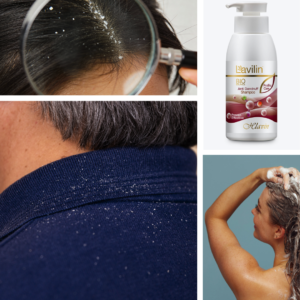
Dandruff may be one of the most common hair-care concerns — and also one of the most embarrassing.
Those white flakes that appear on clothing or along the hairline are usually perceived first and foremost as an aesthetic nuisance — something that disrupts overall appearance and undermines self-confidence, even when there is no real medical issue behind it.
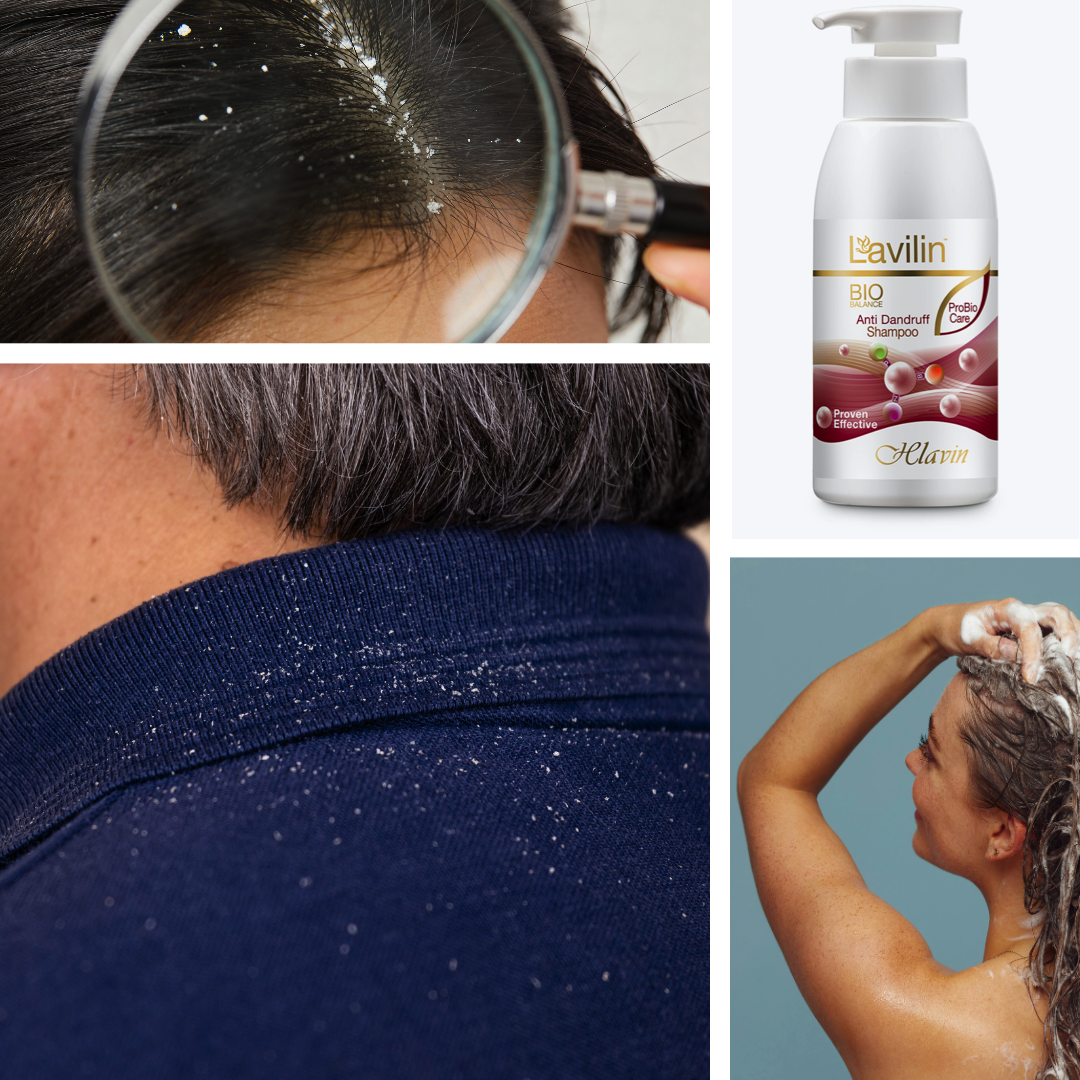
Yet behind this unflattering appearance often lies a scalp that has fallen out of balance. Not a disease, not a drama — but rather a skin response to everyday factors such as stress, weather changes, improper washing habits, or the use of overly harsh products.
The good news: in most cases, accurate and well-targeted care can significantly improve the condition and restore a clean, calm feeling to the scalp.
Contrary to common belief, dandruff is not always caused by dryness. In many cases, it results from a combination of overactive sebaceous glands, the overgrowth of a naturally occurring yeast on the scalp (Malassezia), and a disruption in the skin’s cell-renewal cycle.
The causes vary: hormonal changes, emotional stress, extreme weather, the use of hair products that are not suited to the scalp — and sometimes a combination of all of these factors.
When the balance is disrupted, skin cells regenerate too quickly, leading to the familiar flakes, often accompanied by itching, redness, and discomfort.
Not Every Flake Is Dandruff
Why Proper Diagnosis Changes the Treatment
One of the most common mistakes is confusing a dry scalp with true dandruff.
A dry scalp is typically characterized by fine flaking and a feeling of tightness, while dandruff is more often associated with oil imbalance and thicker, more noticeable flakes.
This distinction matters, because an ill-suited treatment — such as overly drying products — can worsen the condition rather than improve it.
The New Approach: Treating the Scalp, Not Just Cleaning the Hair
How Do Anti-Dandruff Active Ingredients Work?
Switching from a general shampoo to a therapeutic one is not a marketing move — it reflects a deeper understanding of scalp health. An effective anti-dandruff shampoo needs to work on several levels simultaneously:
- Gentle antifungal ingredients that help balance the scalp’s microbial environment
- Soothing agents to reduce itching and redness
- Smart moisturizing components that balance the scalp without weighing down the hair or leaving a greasy feel
- Antioxidants that support a healthy skin environment
In recent years, there has been growing use of ingredients such as Piroctone Olamine, a well-known antifungal active that:
- Does not dry out the hair
- Is suitable for regular use, not only as a short-term treatment
- Is relatively gentle on the scalp, including sensitive scalps
- Allows for combination with moisturizing and restorative ingredients
The presence of vitamin E and balancing plant oils creates a formula that supports ongoing care without damaging the hair fiber or drying out the scalp.
What Should Not Be in an Anti-Dandruff Shampoo Formula
When it comes to anti-dandruff shampoos, what’s not in the formula is just as important as what is. Overly aggressive formulas can cause dryness, irritation, and increased flaking — even if the problem seems temporarily resolved.
For this reason, experts recommend choosing a dedicated anti-dandruff shampoo that does not contain ingredients known to dry or irritate the scalp, such as SLS and parabens — substances that may disrupt the skin’s natural balance and make long-term care more difficult.
At the same time, it’s important that the shampoo includes gentle yet effective active ingredients, such as a research-backed antifungal agent that helps reduce dandruff without drying the hair, alongside balancing plant oils that support scalp hydration and antioxidants that strengthen the hair fiber.
The balance between what is excluded from the formula and what remains in it is what enables effective, pleasant, and consistent care — suitable for all hair types.
Why Gentleness Is Part of the Solution
When Aggressiveness Only Makes Things Worse
In the past, dandruff treatments tended to be aggressive: intense cleansing, medicinal scents, and often secondary dryness. Today, the understanding has shifted — an irritated scalp needs restoration, not combat.
Formulas free from drying agents like SLS or irritating ingredients allow for continuous use while maintaining long-term balance — a critical condition for preventing dandruff from returning.
When Home Care Is Enough — and When It Isn’t
Mild to moderate dandruff can usually be managed with a tailored washing routine and the right active ingredients — such as Lavilin Anti-Dandruff Shampoo or Lavilin TOP Anti Dandruff shampoo.
However, when dandruff is accompanied by severe itching, persistent redness, or worsening symptoms, professional dermatological consultation is recommended.
A Healthy Scalp Is the Foundation of Healthy Hair
Dandruff is not merely an “aesthetic issue” — it’s a signal. A signal that the scalp is asking for attention, balance, and precise care. When it is treated as skin in every sense — with the right ingredients and a gentle approach — the results are not only visible, but also deeply felt.